


Wild Kratts Rescue Run
4.230.00 Reviews
App Specs
- Version
- 2.0.10
- Updated On
- License
- $2.99
- Downloads
- 10,000+
- Developer
- PBS KIDS
- Categories
- Educational
- Platform
- Android, iOS
Screenshots
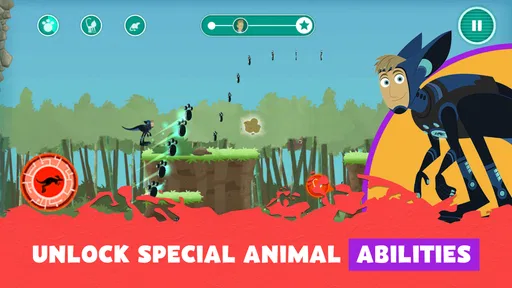
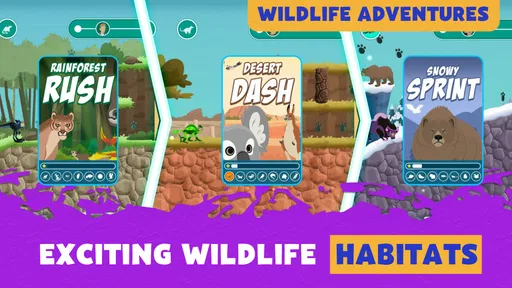
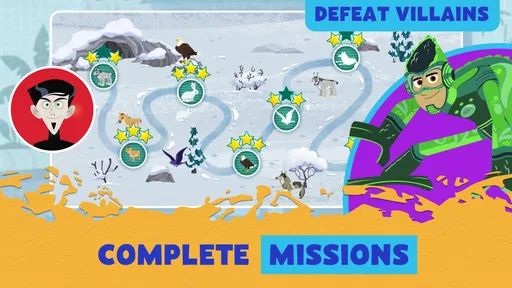

 Analysis by AppCompare
I spent time with Wild Kratts Rescue Run as a child-friendly educational game, and its strongest idea is easy to understand: it turns a running game into a reason to notice animals, habitats, and wildlife behavior. That combination gives it more purpose than a simple reflex game, while keeping the controls approachable for younger players. It is made by PBS KIDS, carries an Everyone age rating, and is aimed at families who want playful learning rather than a demanding action experience.
The game is listed at $2.99, so this is a paid download rather than a free-to-start title. That matters when judging it. I would not approach it as an enormous game with endless variety or the depth of a full console adventure. I see it instead as a focused purchase for a child who already enjoys the Wild Kratts world and would benefit from a game that mixes movement, rescue-themed goals, and animal knowledge. The listed average is 4.2 from around 100 ratings, with over 10 thousand installs, which suggests a modest but established audience rather than a blockbuster-scale app.
How the running format supports learning
The central appeal is the way the game places educational content inside an active play loop. Instead of asking a child to sit through a lesson, it gives the player a reason to keep moving and connect that movement with wildlife subjects. That structure is particularly useful for children who lose interest when an educational app feels like a worksheet. Here, the learning is attached to adventure, so the child can approach it as play first and absorb facts along the way.
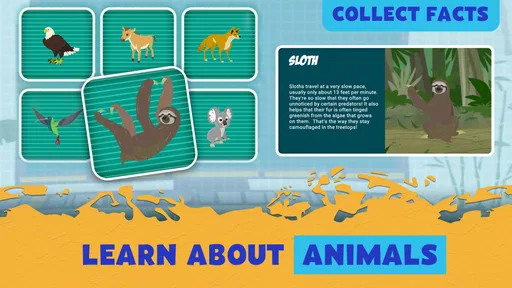
In my experience, that makes the game easier to introduce during a short break than a more formal learning app. A child can pick it up, run through a session, and talk about the animal they encountered afterward. The animal facts are not just decoration; they give parents a natural opening for questions such as where an animal lives, how it moves, or why a particular behavior helps it survive. The game therefore works best when the adult treats it as a conversation starter rather than expecting it to teach a complete science unit by itself.
The rescue theme also gives the running format a little more emotional direction. A standard endless runner can become a repetitive exercise in avoiding obstacles and chasing a higher score. A wildlife rescue framing makes the activity feel more purposeful for younger players. That does not turn it into a complex rescue simulation, and I would not buy it expecting detailed strategy. Its value is simpler: the child has an understandable reason to continue playing, and the animal focus keeps the subject matter consistent.
What a typical play session feels like
The best everyday use case is a short, supervised session after school or during a quiet weekend morning. I would let a child play for a limited stretch, then ask them to explain one animal fact they remember. That small routine changes the app from passive screen time into a quick play-and-discuss activity. It is also a practical way to see whether the educational material is holding the child’s attention without turning the experience into a test.
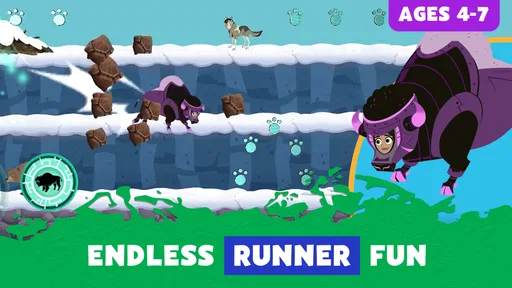
The running design should feel familiar to children who have tried other mobile runners, but the wildlife theme gives it a clearer identity. Younger players who are still learning timing may need a few attempts before movement feels comfortable. That is not necessarily a flaw; simple repetition can help them improve hand-eye coordination. However, parents should expect the game to rely on the child engaging with an action loop, not on reading long explanations or completing traditional quizzes.
Worth Reading Before You Choose

Flipboard Shows What News Apps Must Do Beyond the Feed

Switching to Android Auto Means Rethinking Your Driving Routine

Google Calendar Makes a Crowded Week Easier to Manage

Ludo King Makes the Most of the Minutes Between Plans

Baby Panda World Brings Quick Play to Modern Phones, but Its Game Library Feels Busy

ESPN’s Live Game View Makes Following Close Games Easier
One useful approach is to play alongside the child for the first session. That lets you see whether the pace is comfortable, whether the child understands the objective, and which animal topics spark interest. It also prevents a common problem with educational games: adults assuming that a child is learning simply because the app has an educational label. The real benefit appears when the child remembers, asks questions, or connects the game’s wildlife material with books, television, or a visit to a zoo.
Where the app earns its educational label
The educational value comes from context and repetition rather than from a deep curriculum. The player repeatedly encounters wildlife-focused content while pursuing an active goal, which can make facts easier to remember than isolated information presented on a static screen. For a child who already responds well to characters and adventure, this is a sensible way to introduce animal subjects without making the experience feel academic.
There is also a useful distinction between recognition and mastery. The game can help a child recognize animals, become curious about their behavior, and build a basic vocabulary around wildlife. It is less suitable as the only resource for learning detailed biology, classification, conservation science, or reading comprehension. I would pair it with a library book or a conversation with an adult if the goal is lasting understanding. The game opens the door; it does not replace a broader learning routine.
Parents can get more from it by pausing after play and asking the child to compare two animals or describe how one might survive in its environment. Those questions extend the experience without needing extra tools inside the app. This is one of the more valuable trade-offs: the game itself stays accessible, but the depth depends partly on how the family uses it afterward.
Cost, value, and the limits of a small purchase
The cost is straightforward: the game is priced at $2.99. Because it is a paid app, the decision is less about managing an ongoing free-to-play loop and more about whether this focused experience deserves a place in a child’s small collection. I appreciate that the price is easy to understand. A parent who specifically wants a Wild Kratts-themed educational runner can judge the purchase directly instead of having to estimate future spending.
At that price, I think the value depends heavily on interest in the subject and the characters. A child who enjoys wildlife and likes fast, simple mobile play may return to it often enough for the purchase to feel worthwhile. A child who prefers puzzles, drawing, open exploration, or slower interactive stories may not get the same value, even if the educational category sounds appealing. The paid model does not automatically make the game better; it simply gives the buyer a clearer cost boundary.
The game’s listed current version is 2.0.10, and it requires Android 5.1 or later. Those details are important for families using an older device. I would check the phone or tablet’s operating system before purchasing, especially if the app is intended for a hand-me-down device. Compatibility is a small practical issue, but it can decide whether a low-cost purchase is useful at all.
The release date is December 20, 2017, so I would set expectations accordingly. This is not a newly designed mobile experience built around the latest platform conventions. Its appeal comes from the established Wild Kratts concept and the straightforward educational runner format, not from being a showcase for modern mobile technology. Families looking for the newest visuals, the broadest progression systems, or frequent contemporary updates may find the package less compelling than newer alternatives.
How it compares with common alternatives
Compared with a typical endless runner, this game has a stronger reason for parents to approve play. The wildlife subject gives the action more educational context, and the rescue framing is more purposeful than simply chasing distance or points. The trade-off is that players who want intense competition, elaborate customization, or a large variety of modes may find it restrained.
Compared with a dedicated animal encyclopedia or science app, it is more immediately playful and probably easier to offer to a child who resists formal learning. On the other hand, an encyclopedia-style app is usually the better choice when the goal is looking up specific species, reading detailed explanations, or supporting a school assignment. This game is a gateway to curiosity, not a reference library.
Compared with a story-driven children’s game, the runner format gives it more active involvement but potentially less narrative depth. A child who wants to follow a long plot may prefer an adventure with dialogue and exploration. A child who enjoys repeating short challenges and improving control may prefer this one. That distinction is more useful than simply calling the app educational: the play style determines whether the learning content will actually be welcomed.
Small details that affect the buying decision
First, I would not assume that the Everyone rating means every child will find the game equally comfortable. The rating indicates broad age suitability, but a younger player may still need help with timing and understanding the running objective. A parent’s first-session guidance can make the difference between “this is fun” and “I do not know what to do.”
Second, the game is a better fit for short repeat sessions than for a long family play marathon. Endless-runner mechanics naturally encourage repetition, but the educational material benefits from stopping occasionally and discussing it. If a child plays continuously without noticing the animal information, much of the app’s distinctive value is lost.
Third, the purchase makes the most sense when it fits an existing interest. If a child already talks about animals, watches wildlife programs, or enjoys the Wild Kratts theme, the app has an immediate advantage because the subject matter is familiar and motivating. If the child has no interest in wildlife, the educational angle may not be strong enough to overcome the runner format.
Fourth, I would treat the app as an activity for one child at a time rather than a group game. Its strengths are personal control, repetition, and conversation with an adult afterward. It is not the choice I would make for a family seeking cooperative play, a shared creative project, or a game that keeps several children engaged together.
Who should choose it
I would recommend it to parents looking for a reasonably priced educational animal game with an active format. It is especially suitable for children who enjoy running games but need a more constructive theme, and for Wild Kratts fans who want another way to interact with the wildlife world. The Everyone rating also makes it a practical candidate for a broad family audience, provided the child can manage simple action controls.
It can also work in a classroom-adjacent setting, although I would use it as an optional enrichment activity rather than a complete lesson. A teacher or parent could let a child play briefly and then ask them to describe an animal, draw its habitat, or find another source about it. That workflow gives the game a clear role: it creates interest, while the follow-up activity develops language and knowledge.
I would skip it for a child who wants a deep educational system with quizzes, structured levels, or measurable academic progression. I would also look elsewhere for a player who dislikes repetition or becomes frustrated by reflex-based controls. The game’s focused design is its strength for the right audience, but it is also the reason it will not satisfy every kind of learner.
My buying verdict
My overall view is positive but specific. Wild Kratts Rescue Run offers a clear blend of wildlife learning and accessible running gameplay, and the $2.99 price makes it a contained purchase rather than a commitment to ongoing spending. I like it most as a short, shared activity: the child plays, notices an animal fact, and then talks about it with an adult.
I would buy it for a young Wild Kratts fan or an animal-loving child who enjoys simple action games. I would skip it if the main goal is advanced science learning, rich storytelling, multiplayer entertainment, or a modern, content-heavy mobile adventure. Its value is not in doing everything; it is in making wildlife facts feel connected to movement and rescue-themed play.
For families that understand that trade-off, the game is easy to recommend. It is a compact educational choice with a recognizable focus, a broad age rating, and a price that can be evaluated plainly. Just keep the sessions purposeful, use conversation to deepen the facts, and choose it because the child is likely to enjoy the animal-centered runner—not because the educational label alone guarantees lasting learning.
Pros
- Bright
- colorful visuals make the game appealing to younger players.
- Simple controls are easy for children to learn quickly.
- Animal-themed missions add educational value to the gameplay.
- Short levels work well for quick play sessions.
- Familiar Wild Kratts characters make the adventure more engaging.
Cons
- Gameplay can feel repetitive after playing several rescue missions.
- Some devices may experience occasional lag or loading delays.
- The game offers limited depth for older children and adults.
- Progress may feel slow without revisiting earlier levels.
- An internet connection may be needed for some features or updates.
FAQs for Wild Kratts Rescue Run
What is Wild Kratts Rescue Run?
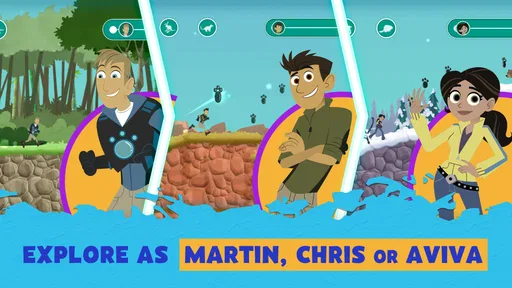
Wild Kratts Rescue Run is an educational adventure game inspired by the Wild Kratts television series. Players help Chris and Martin rescue animals, avoid obstacles, collect useful items, and explore colorful environments based on wildlife habitats. The game combines simple running gameplay with animal-themed challenges, making it especially appealing to younger fans who enjoy nature, exploration, and the characters from the show.
How do you play Wild Kratts Rescue Run?
The game uses straightforward controls designed for children and casual players. You guide a Wild Kratts character through different stages, moving around obstacles, collecting items, and completing rescue objectives. Timing and quick reactions are important, but the gameplay is generally easy to understand after a short introduction. Progress comes from finishing runs, discovering animals, and improving performance across the available missions.
Is Wild Kratts Rescue Run suitable for children?
Yes, Wild Kratts Rescue Run is primarily designed for children and families. Its bright visuals, familiar characters, non-violent objectives, and wildlife-focused theme make it more suitable for younger players than many action games. Parents should still review the app’s current store information and device settings, particularly regarding advertising, external links, purchases, and any data permissions that may be included in the version available in their region.
Does Wild Kratts Rescue Run require an internet connection?
The basic game may be playable without a constant internet connection, which is convenient for travel or situations where Wi-Fi is unavailable. However, some features can depend on connectivity, including downloading the game, displaying advertisements, checking for updates, or accessing external content. Because requirements can change between Android and iOS versions, it is best to verify the latest store listing before downloading.
Is Wild Kratts Rescue Run free to download?
Wild Kratts Rescue Run may be offered as a free download, but availability, pricing, advertising, and optional purchases can vary depending on the platform and region. Before installing it, check the Google Play or App Store listing for the current cost and in-app purchase details. If children will use the app, parental controls and purchase restrictions are recommended to prevent accidental transactions.


